Job Match Analysis
See your CV through the eyes of a recruiter (and the ATS) before you apply.
AI screening has moved beyond keyword counting. Modern systems evaluate semantic meaning - they recognize whether your CV contains the specific data signals that indicate a credible match for a role, not just whether you used the right words. The new bottleneck is signal quality: how specifically and contextually you have described what you have done and achieved. A vague responsibility statement that could describe anyone passes no signal; a precise achievement tied to a real outcome does. Job Match shows you where your CV contains the right signals, where they are present but too implied to register, and where they are missing entirely - so you know exactly what to sharpen before you apply.
Benefits
Job Match maps the role's required skills, experience signals, and competencies across the full posting - so you know exactly what the role asks for before you start editing.
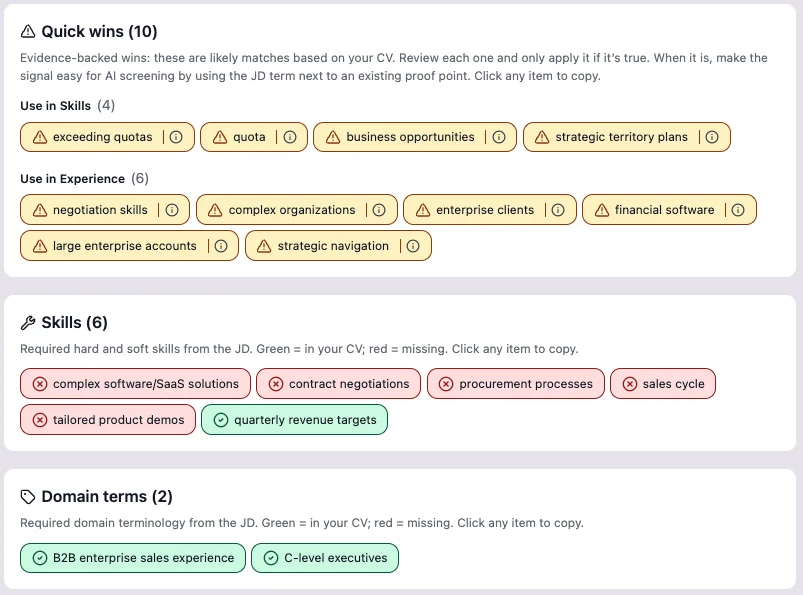
The analysis groups findings into matched, implied, and missing - telling you not just what to add, but what is already working.
Use it to prioritise your edits: a gap on a specific requirement tells you where to add real evidence, not which keywords to insert.
Skills embedded in your experience entries but never stated outright are the most common quick win - making them explicit often improves your score without fabricating anything.
How it works
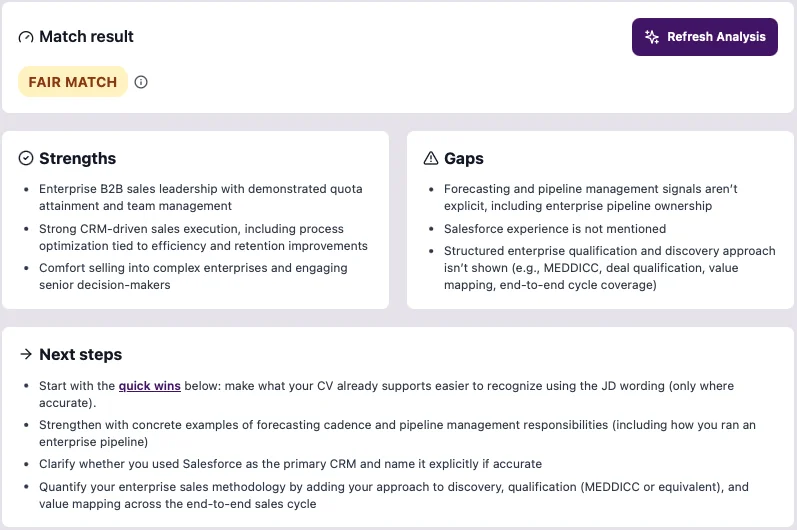
A full posting with all sections produces a detailed gap analysis.
The analysis classifies each match as explicit, implied, or missing, and surfaces the gaps you need to close.
Only add content that reflects actual experience - each addition should be something genuine, not a keyword insertion.
The analysis updates to reflect your latest content, so you can see exactly which gaps you have closed.
FAQs
Tips for best results
- Paste the full job description, not just the headline or summary. The responsibilities and requirements sections often surface different signals and experience requirements from the job title alone, and the analysis uses all of them.
- Start with the implied findings. These represent experience you already have but have not made explicit - the fastest improvements with no fabrication required.
- Do not chase 100%. A high score built on claims you cannot defend in an interview is worse than a moderate score built on solid evidence.
- Save the job description in your application workspace before applying. Many postings are removed once a role closes, and you will want the original text for interview preparation.